Consider a hypothetical refurbishment: a contractor is preparing to waterproof two areas of the same building—a sheltered bathroom floor and an external tiled balcony. Both have cementitious substrates. Both will receive tiles. The quotation proposes the same rigid cementitious coating for each.
That may be appropriate, but the matching finishes do not establish matching waterproofing requirements. Before accepting the proposal, the specifier needs to understand the condition of each substrate, whether cracks are likely to move, and what exposure the completed system will face.
The decision starts with the construction beneath the coating.
What “rigid” and “flexible” actually tell you
Rigid cementitious waterproofing generally suits sound, stable mineral substrates where significant movement is not anticipated. Some products permit treatment of fine, non-moving cracks, subject to their application requirements. That does not make them suitable for bridging cracks that continue opening and closing.
“Polymer-modified” does not automatically mean flexible. A cementitious coating can contain polymers and still be described by its manufacturer as a rigid waterproofing system. Selecting by that phrase alone can therefore lead to the wrong specification.
Flexible cementitious coatings are formulated to accommodate a defined amount of deformation and crack opening. Their performance varies. Crack-bridging results depend on the test method, temperature, applied thickness, and other conditions; an elongation percentage is not a substitute for evidence of crack-bridging performance. Manufacturer data demonstrate why these properties must be read separately.
For specification purposes, “flexible” should prompt a further question: flexible enough for the movement expected here, under the proposed service conditions?
Read the substrate before selecting the coating
A surface can look acceptable after cleaning while still containing defects that need repair. Inspect for honeycombing, loose material, damaged concrete, and contamination before discussing coating grades. Cemseal’s published Cemseal FLEX data sheet, for example, requires a structurally adequate, clean substrate and repair of concrete defects before application.
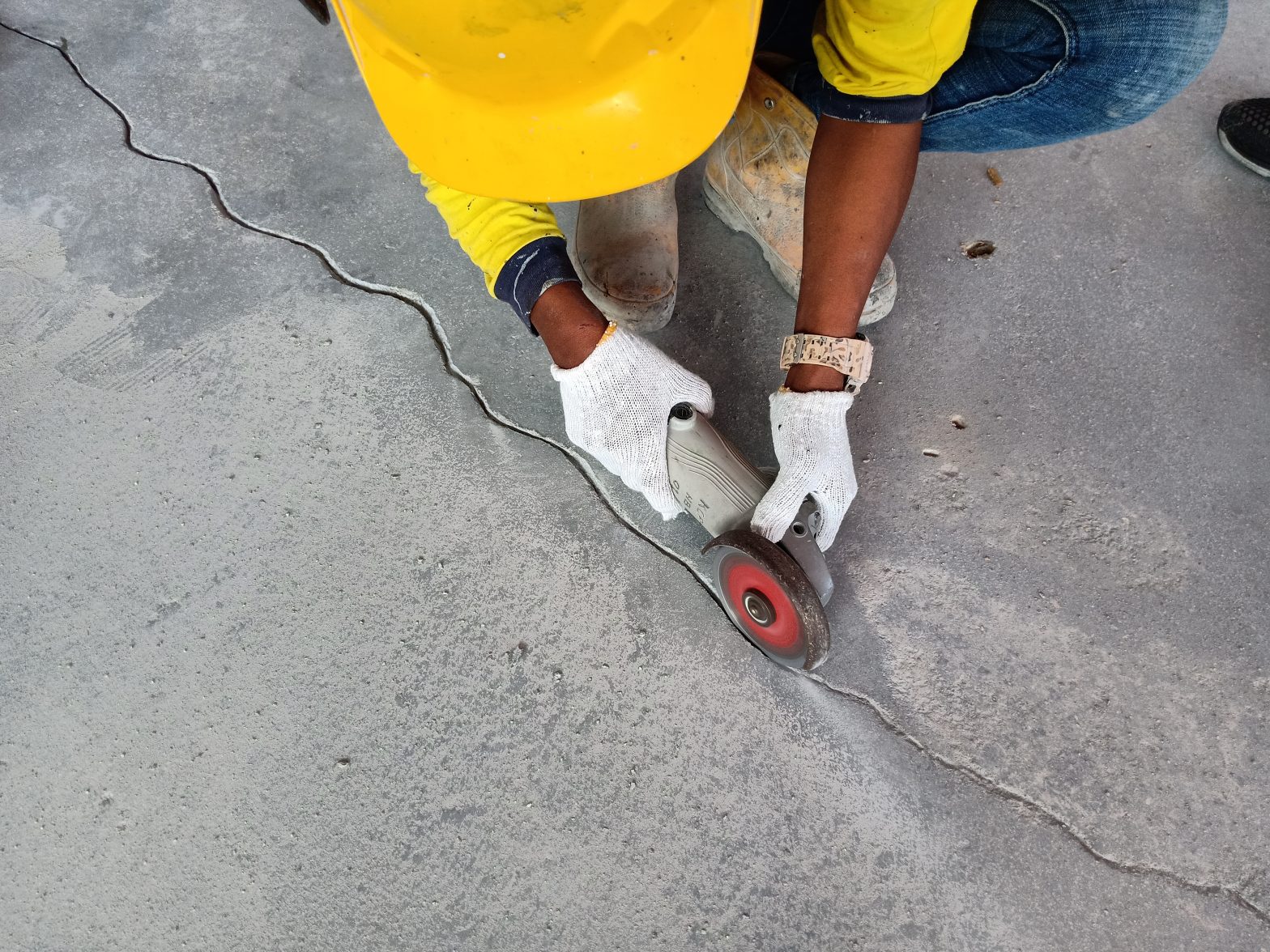
Cracks need particular attention. Record their location and investigate their cause. Where ongoing movement or structural distress is suspected, obtain the designer’s assessment rather than asking the waterproofing applicator to make a structural judgement.
Returning to the hypothetical bathroom, a rigid system could be considered if the substrate is stable and the product is approved for the complete proposed application. For the semi-exposed balcony, the design review should also consider external exposure, restraint, movement joints and the behaviour of the supporting construction.
A flexible coating may be appropriate, but upgrading the coating does not resolve an unstable substrate.
A practical starting point
The table below helps narrow the selection. It does not replace the selected product’s technical data or project detailing.
Design consideration | Rigid cementitious system | Flexible cementitious system |
Sound, stable concrete or render | Where the declared use and exposure match | Assess whether flexibility is needed |
Anticipated crack opening | Do not assume crack-bridging capability | Check verified capability and relevant test conditions |
Movement or expansion joints | Requires a separate designed joint detail | Requires a separate designed joint detail |
Water pressure | Confirm pressure direction and supported application | Confirm pressure direction and supported application |
Tiles, screed or other finishes | Verify compatibility and overcoating requirements | Verify compatibility and overcoating requirements |
These distinctions reflect product specific manufacturer guidance; neither category establishes suitability on its own.
Exposure and water pressure change the decision
A bathroom receiving intermittent water, a continuously filled tank, and a basement wall exposed to groundwater present different service conditions. Describe the actual exposure in the specification instead of relying on a broad label such as “wet area”.
Pressure direction matters. Positive side waterproofing faces the water source. Negative side waterproofing is applied on the opposite face, with water reaching it through the substrate. Evidence for one condition should not be treated as evidence for the other. Some flexible cementitious products explicitly declare negative pressure performance, so flexibility alone is not a reason either to accept or reject that application.
For a Malaysian external balcony or deck, ask whether the coating will remain exposed or sit beneath a protective finish. Confirm suitability for the intended weather exposure, water contact and maintenance arrangements. “External use” should not be interpreted as blanket approval for an exposed, trafficked roof.
Flexibility does not eliminate detailing
A movement joint is an intentional location for movement. It needs a waterproof joint arrangement designed for that movement, rather than an ordinary coating carried continuously across it.
Similarly, pipe penetrations, drains and wall floor junctions need coordinated details. Depending on the selected system, these may involve compatible tapes, collars, sealants or other accessories. Manufacturer instructions for flexible cementitious systems still require joints and penetrations to be made watertight separately.
Structural repairs remain a separate responsibility. A flexible membrane cannot restore structural capacity or justify leaving a developing defect uninvestigated. Resolve the repair strategy first, then design the waterproofing continuity around it.
Application decisions can undermine a sound specification
Preparation and substrate moisture. Remove laitance, curing compounds, release agents, and loose material using an appropriate preparation method. Follow the specified moisture condition. Where saturated surface dry preparation is required, the substrate should be dampened without leaving excess surface water; “moisture tolerant” does not mean application into standing water.
Mixing and thickness. Use the prescribed component proportions or water dosage. Do not adjust the mix by eye to make application easier. Specify the required total consumption and observe limits per coat: counting coats alone does not demonstrate that the required build up has been achieved. Application method can also affect the permitted consumption and number of coats.
Curing and protection. Plan application around site conditions. Direct sunlight, wind, and approaching rain can require postponement or protection. Follow the particular product’s curing instructions rather than assuming every cementitious coating should receive the same wet curing treatment. Protect the completed work from subsequent construction activities until the specified protective layer or finish is installed.
Finishes and testing. Agree the tile adhesive, screed, render or subsequent coating before waterproofing begins. Observe the required hardening and overcoating periods, and confirm readiness before water testing or immersion. A coating that feels dry is not necessarily ready for the next operation.
Make the selection defensible
A useful specification records the substrate condition, anticipated movement, water exposure, pressure direction, joint details and subsequent finishes. It then links those requirements to a product with appropriate supporting evidence and a workable application procedure.
Choose rigid cementitious waterproofing where stability and the declared application support it. Choose a flexible system where verified movement accommodation is needed. Where neither addresses the design conditions adequately, reconsider the waterproofing arrangement.
For assistance reviewing substrate conditions, details and system selection, discuss your project requirements with Cemseal’s technical team.
Legal disclaimer
This article is provided by Cemseal Industries Sdn. Bhd. for general technical information. It does not constitute project-specific design advice, a product specification or a warranty. Recommendations are given in good faith based on the information available at the time of publication. Actual suitability and performance depend on the materials, substrate condition, design, exposure, workmanship and other site conditions.
The project designer, specifier and applicator must assess suitability for the intended application and refer to the latest applicable Cemseal Technical Data Sheets, Safety Data Sheets and written project recommendations. This article does not replace structural assessment, project requirements or applicable laws and standards. This article creates no warranty of fitness for a particular purpose. Any product warranty or contractual obligation is governed by the applicable written agreement and terms of sale. Third-party proprietary rights must be respected.
Copyright
© 2026 Cemseal Industries Sdn. Bhd. All rights reserved. Except as permitted by applicable law, no part of this article may be reproduced, distributed or republished without prior written permission from Cemseal Industries Sdn. Bhd. Third-party materials, trademarks and referenced publications remain the property of their respective owners.